The Science of Calm: How Your Nervous System Shapes the Space Around You
 Michelle Molotte
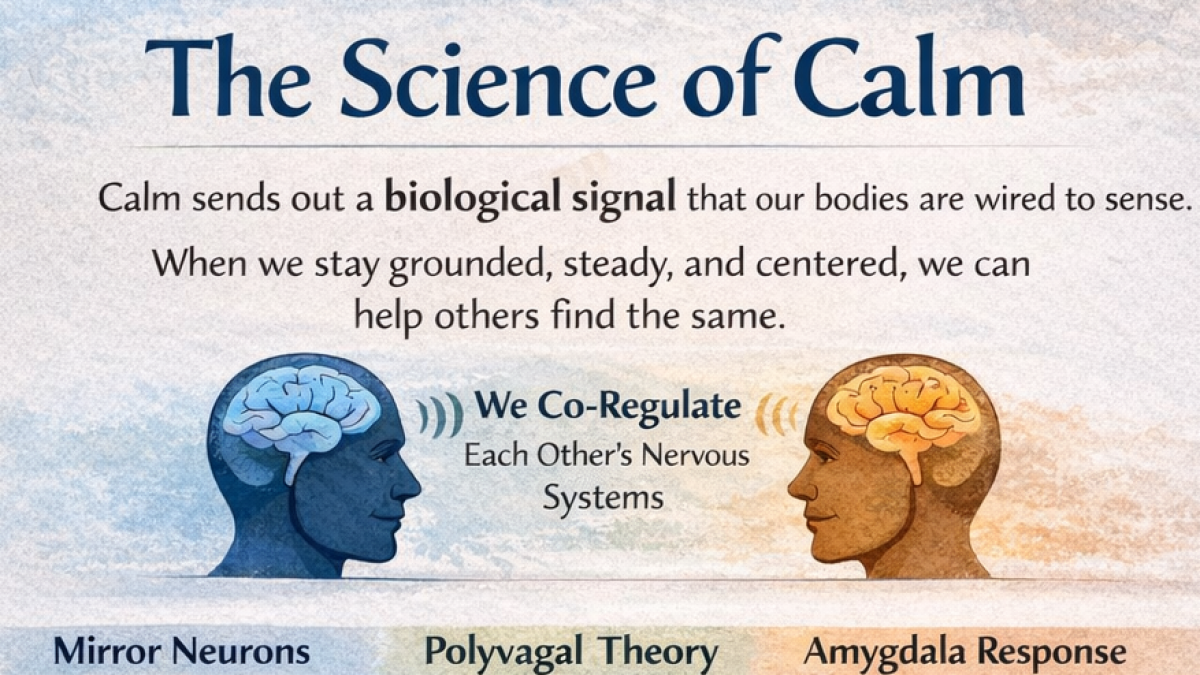
Calm is more than a feeling—it’s a biological signal. Explore how nervous system regulation influences people, animals, and environments, and why stay
The Science of Calm (And Why It Changes Everything)
There’s something most of us sense instinctively, even if we don’t have language for it.
When someone walks into a room calm, grounded, and present, the room feels different.
When someone arrives rushed, tight, or reactive, that shifts the space too.
This isn’t personality.
It isn’t mindset.
It isn’t even intention.
It’s biology.
Our nervous systems are always communicating—quietly, constantly, beneath words. We don’t just respond to what people say. We respond to how safe, steady, or unsettled their body feels to be around.
Calm is not just a personal state.
It’s a biological signal.
We Are Wired to Co-Regulate
Human nervous systems are designed for connection. Long before logic or conversation kicks in, our bodies are reading cues from the people around us.
Tone of voice.
Facial expression.
Posture.
Pace of movement.
Breath.
All of it matters.
This is what neuroscience refers to as co-regulation—the way nervous systems influence and shape one another. We borrow regulation from each other. We borrow safety. We borrow steadiness.
This is why calm can spread just as quickly as stress.
What’s Happening Under the Surface
When we’re around someone grounded and regulated, a few important things happen automatically:
Our brains mirror what they perceive.
Our nervous system picks up cues of safety.
Our stress response softens instead of escalating.
A calm presence doesn’t demand attention. It doesn’t force compliance. It doesn’t try to control the moment.
It quietly signals: You’re safe here.
And that signal allows the body to shift out of defense and into clarity.
Calm Is Not Passive
This is an important reframe.
Calm is often misunderstood as weakness, avoidance, or checking out. But true calm is anything but passive.
Calm is regulated strength.
It’s the ability to stay with yourself when things get uncomfortable.
To remain present instead of reactive.
To choose steadiness when everything around you is pulling for escalation.
This kind of calm takes awareness. It takes practice. And it changes how others experience you.
At Work, Calm Becomes Leadership
People don’t respond to strategies alone. They respond to the emotional environment.
A regulated leader creates space for clearer thinking.
For cooperation instead of defensiveness.
For problem-solving instead of blame.
Teams don’t just listen to words. They feel nervous systems.
With Animals, Calm Becomes Communication
Animals are especially sensitive to this.
They don’t need explanations.
They don’t respond to logic.
They feel regulation—or the lack of it—immediately.
A calm human helps animals feel safe.
Safety builds trust.
Trust allows connection.
This is why animals often settle not because we do something, but because we become something different.
Your Nervous System Is Part of the Environment
Whether you’re leading, parenting, working with animals, or simply moving through daily life, your nervous system doesn’t exist in isolation.
It sets a tone.
It shapes interactions.
It influences behavior.
Calm doesn’t stay contained.
It’s shared.
So here’s the question to sit with—not to fix, not to judge, just to notice:
What might shift if you didn’t try to control the moment… and instead stayed with yourself inside it?
Sometimes that’s where everything begins.
Categories: : Unbridled